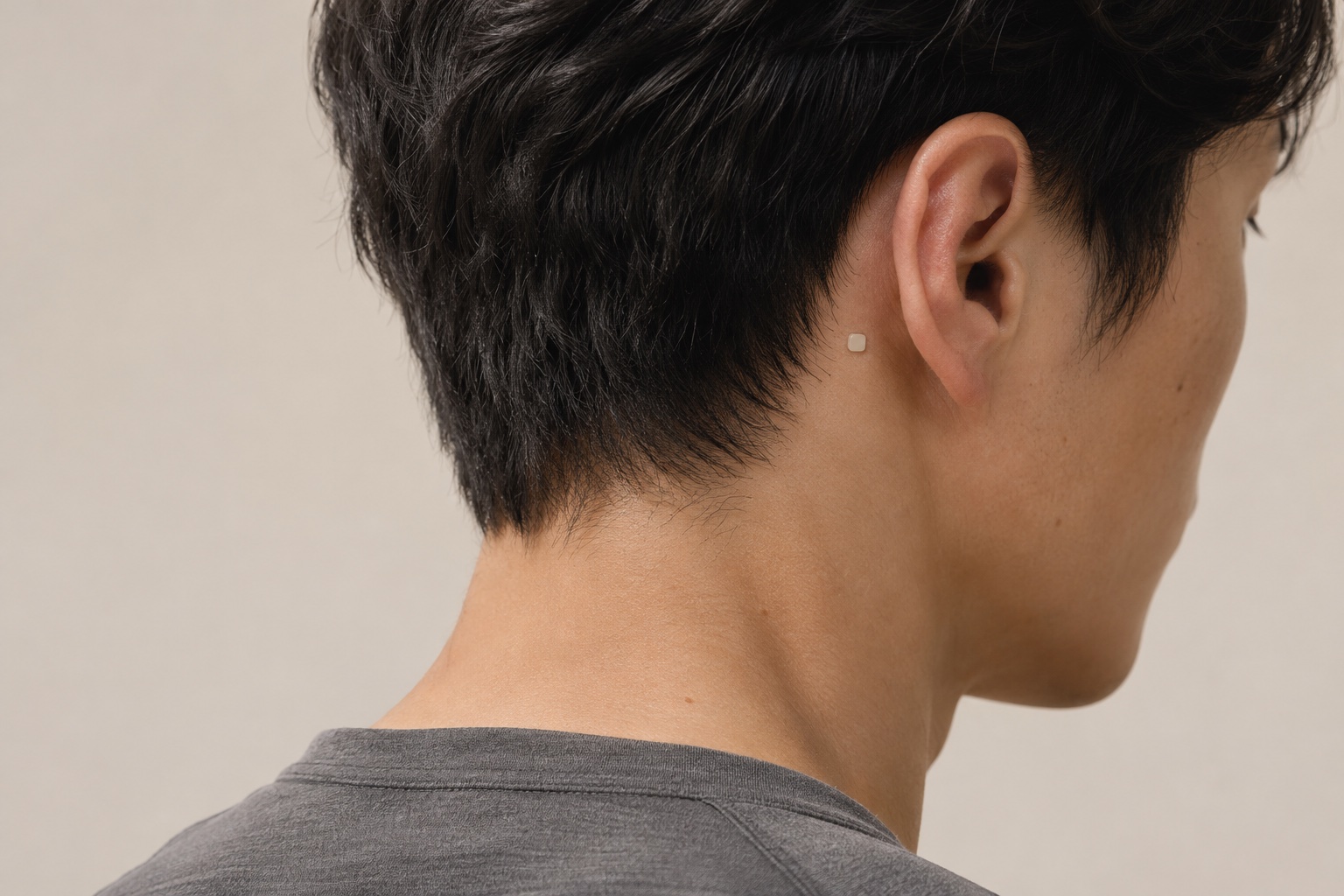
 Behind the ear Placement concept
Behind the ear.
An optical pulse reference near the head. Neural sensing remains a longer-term research direction.
- Candidate signals
- Optical pulse · motion
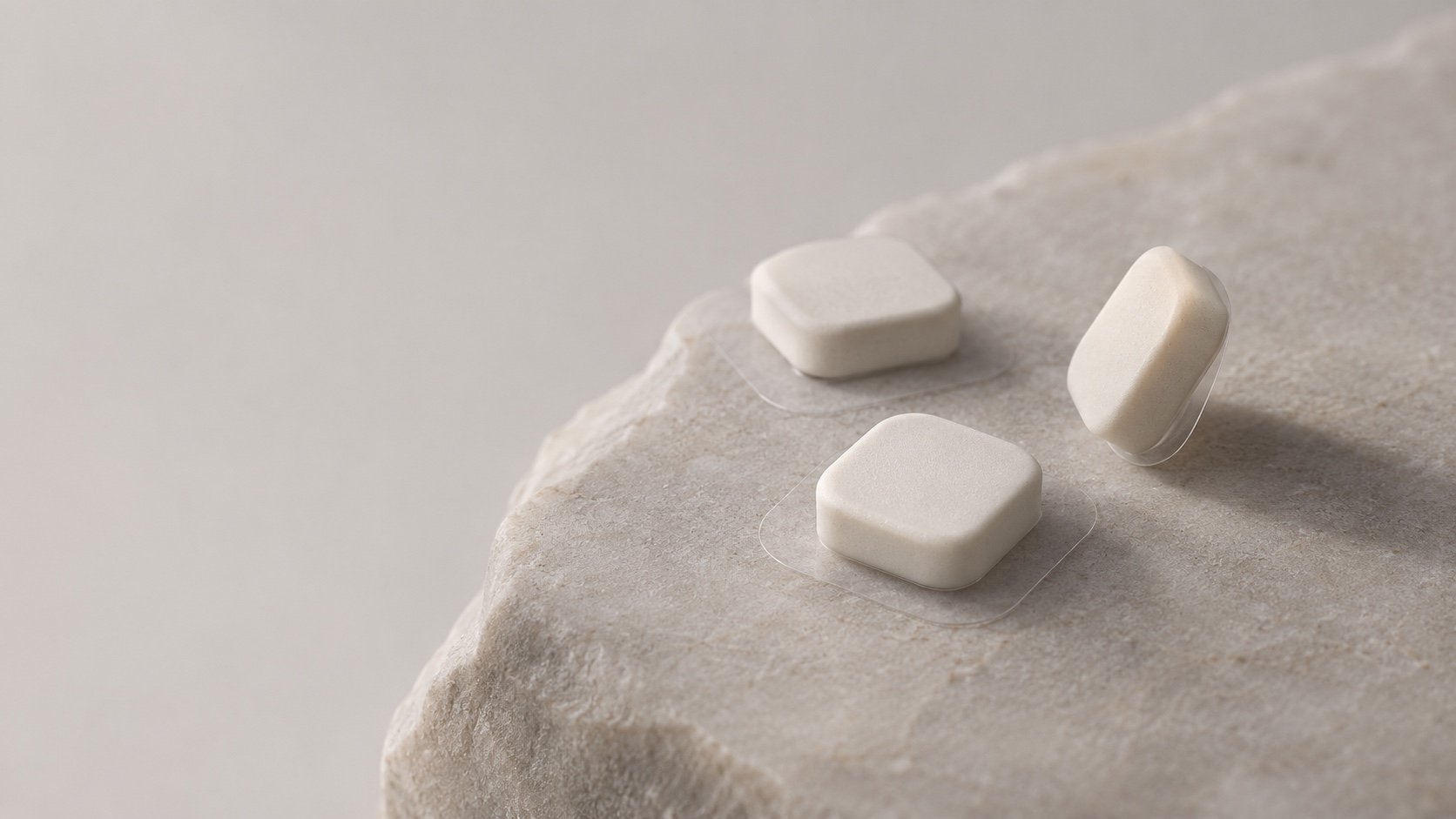
Tiny bioadhesive sensors.
Designed to measure together.
THE ARRAY
Timing, local differences and movement. Measured as one network.
Behind the ear Placement conceptAn optical pulse reference near the head. Neural sensing remains a longer-term research direction.
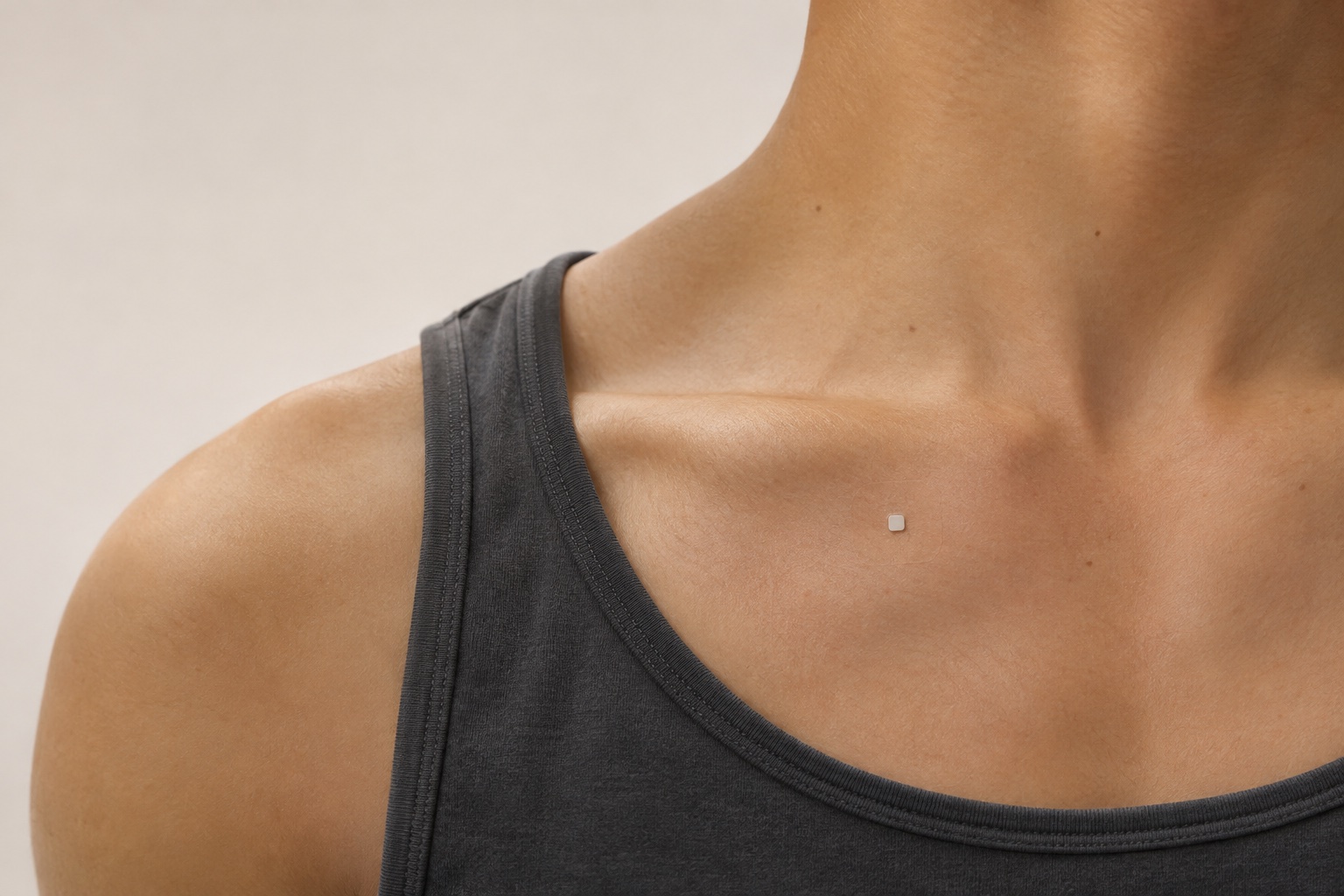 Chest Placement concept
An electrical timing reference to compare with optical pulse signals elsewhere.
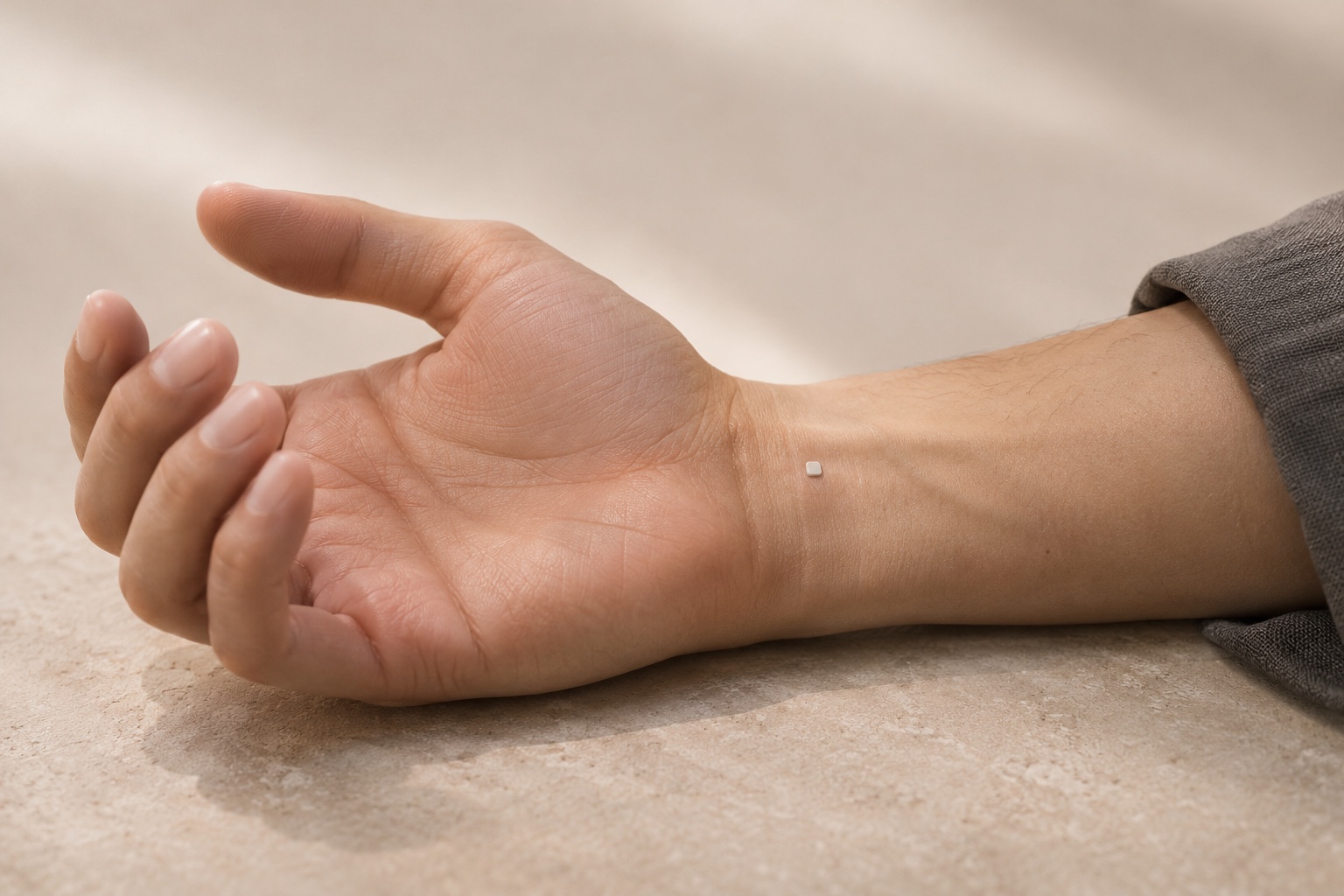 Wrist Placement concept
A peripheral pulse measurement to compare with the chest, ear and leg.
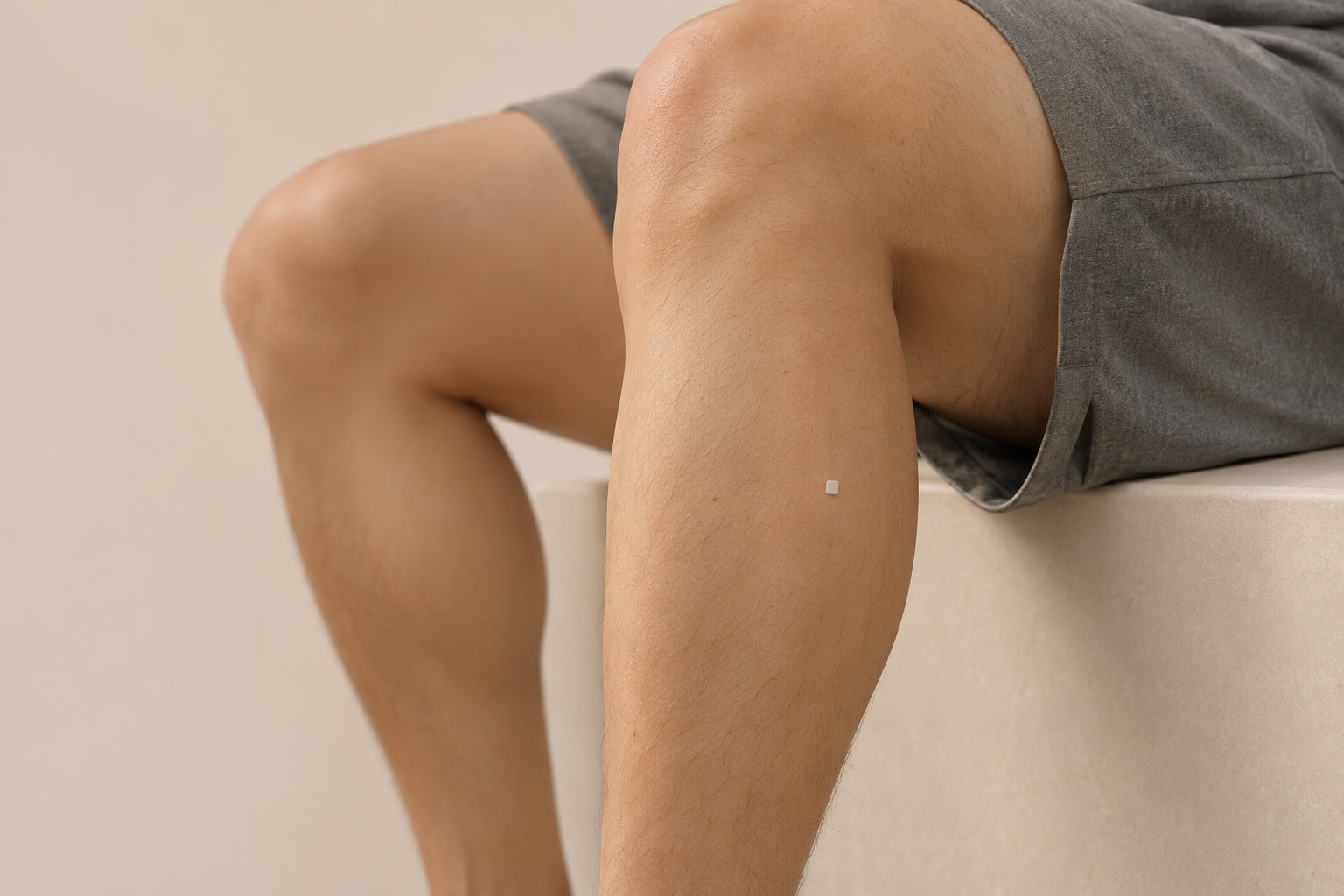 Leg Placement concept
A lower-body view of movement and local changes, connected to the rest of the array.
Proposed placements. Generated concept images; scale is illustrative. Neural sensing remains exploratory.
THE SYSTEM
Timing, differences between sites, and movement give each measurement context.
Compare chest ECG with optical pulses elsewhere. The delay between them is a research signal in its own right.
Shared timingChestECGEarPPGWristPPGLegPPGExplore temperature gradients between central and peripheral sites, alongside local pulse changes. Temperature sensing is a candidate research direction.
Spatial relationshipsChestTemperatureEarTemperatureWristTemperatureLegTemperatureRead heart timing and pulse shape alongside movement. Preserve useful differences; weigh each channel by its signal quality.
Complementary measurementsChestElectrical timingWristOptical pulseMovementIMU contextResearch directions, not demonstrated device capabilities. All traces are illustrative.
We’re exploring shared timing, site-specific baselines, adaptive sampling and signal-quality weighting. Synchronization, contact, calibration and power remain engineering challenges. More channels do not automatically mean better data.
ECG-to-pulse arrival timing includes the heart’s pre-ejection period. Temperature gradients and optical signals also depend on placement and environment. These studies inform the concept; they do not validate 30 Mesh.
Bioadhesive interface · Concept visualization
ON SKIN
A thin bioadhesive film is designed to hold each sensor in place without a strap.
Reuse the electronics. Replace the skin-contact layer.
Materials, comfort and wear time remain under evaluation.
Progress updates. Occasional invitations to get involved.
For research, partnerships and ideas.
Founded in Boston by Ian Kim, a mechanical engineering student at Northeastern.